Sumário
New Year’s Eve is a moment that invites reflection. As we make plans for the period ahead, we look back on the year’s events, challenges, and achievements, drawing valuable insights to guide our future decisions.
With that in mind, we present the 10 most-read posts on dtLabs’ blog in 2025. This list mirrors the diversity and relevance of topics shaping the progress of Artificial Intelligence and Computer Vision worldwide.
In this compilation, you’ll find everything from the most technical deep-dives—such as Multi-Object Tracking with Multiple Cameras (MCMOT) and the fundamentals of SLAM—to articles directly focused on market realities, like the MRS Logistics case study and the application of Computer Vision in workplace safety.
Join us to revisit, or discover, the topics that most engaged our community over the year.

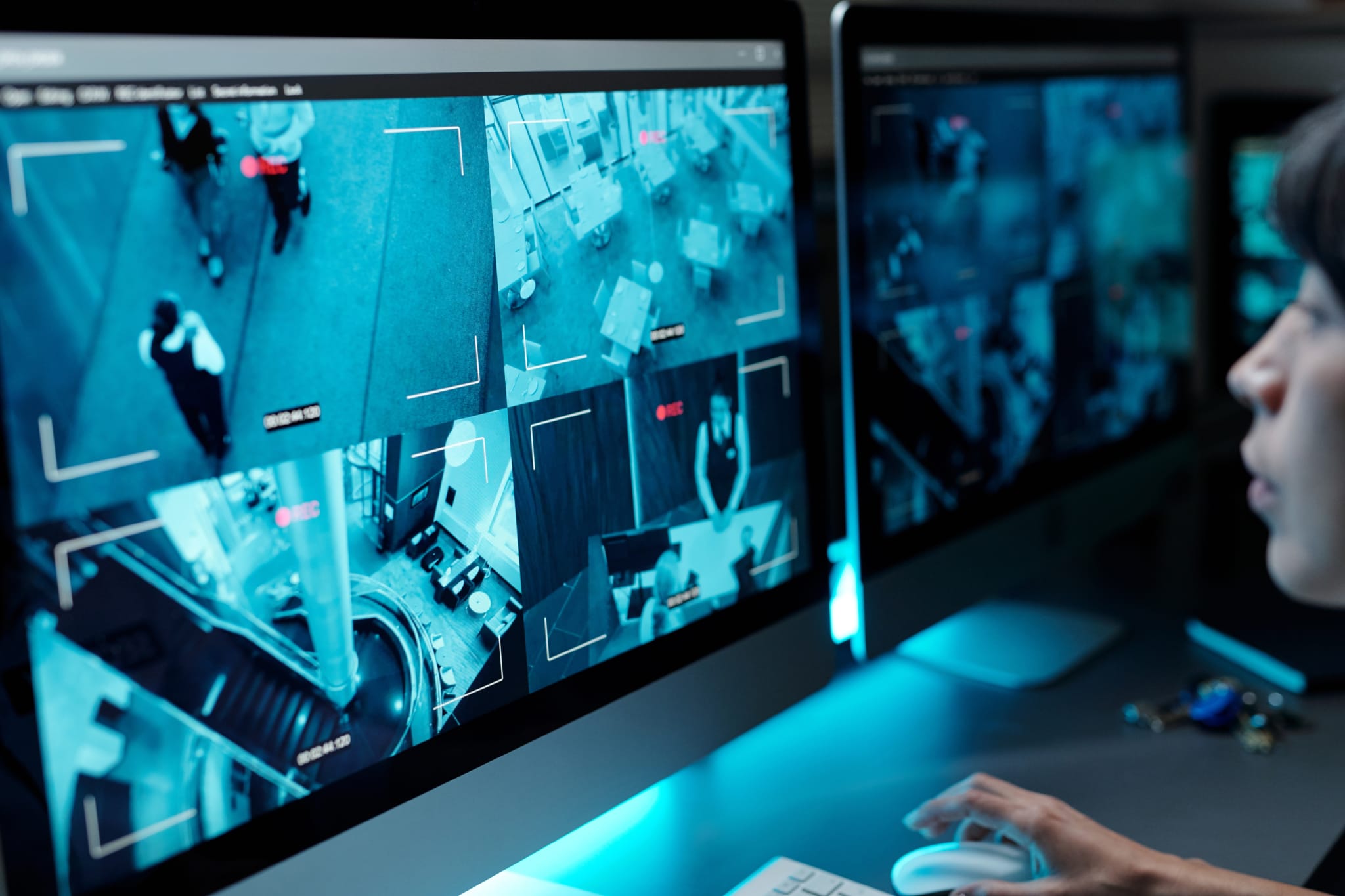
This article explains the technical workings of ALPR (Automated License Plate Reading), a system that uses cameras and OCR (Optical Character Recognition) to convert license plate images into digital data.
It highlights how advancements in Artificial Intelligence have enabled these systems to operate with high accuracy even under challenging conditions, such as high-speed vehicles or low-light environments.
Applications range from traffic monitoring and parking management to public safety, helping identify stolen or irregular vehicles. It’s an essential tool within the smart city concept.
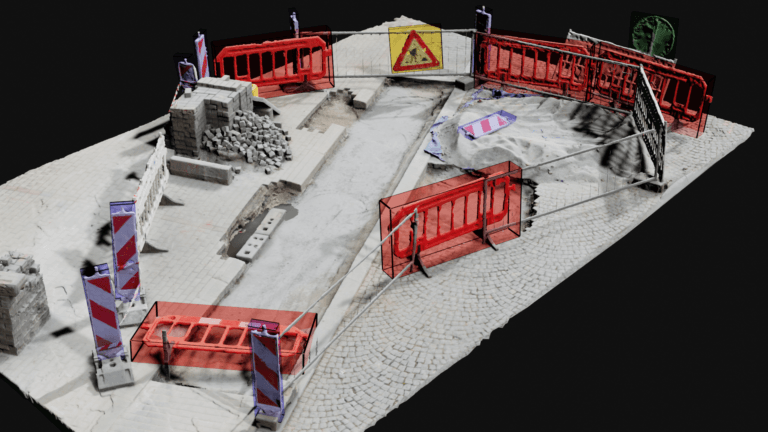
This technical post explores the challenge of 3D data annotation — a process traditionally known for being slow and costly. The presented solution leverages the Structure-from-Motion (SfM) technique to estimate 3D structures from sequences of 2D images.
By adopting a semi-automatic workflow, the technology allows the system to generate accurate pre-annotations that require only a final human review. The article highlights how this approach drastically accelerates the training of algorithms for robotics and autonomous vehicles, optimizing the development cycle of complex AI projects.

In this article, we introduce AIOS as a robust platform designed to manage the complete lifecycle of computer vision solutions. The focus is on its ability to seamlessly integrate different AI models and hardware components, enabling industries to monitor processes efficiently in real time.
Among the benefits discussed are reduced operational failures, resource optimization, and the ease of implementing Edge AI, demonstrating how AIOS can serve as the technological backbone for companies pursuing digital transformation and Industry 4.0.
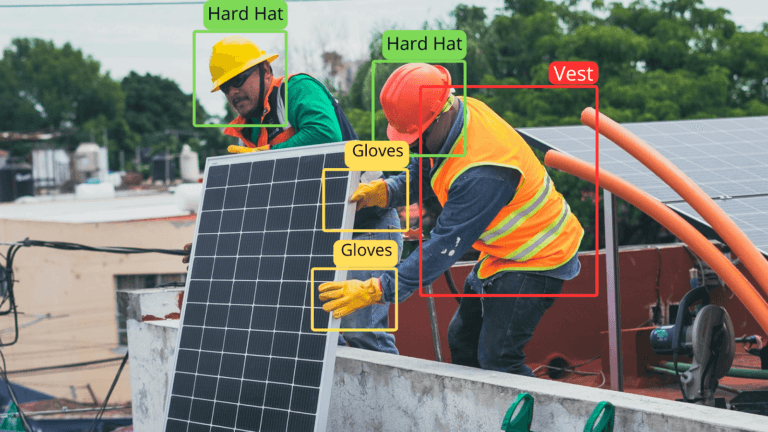
Focused on occupational health and safety (OHS), this article explores how computer vision can serve as an extra layer of protection for employees. The technology can automatically detect missing PPE (Personal Protective Equipment), identify worker falls, or monitor access to restricted areas.
Beyond issuing real-time alerts to prevent accidents, it also generates statistical data that helps managers identify patterns of unsafe behavior, enabling more targeted training and fostering a data-driven culture of prevention.

This case study details the strategic partnership between MRS Logística and dtLabs. The project focuses on using smart cameras and sensors to monitor railway assets and optimize maintenance and safety processes.
The implemented solution provides greater visibility into the wagon loading process, reducing downtime and increasing operational safety. The article emphasizes how technological innovation in the logistics sector is key to competitiveness, showcasing tangible results in efficiency and the reduction of operational costs.
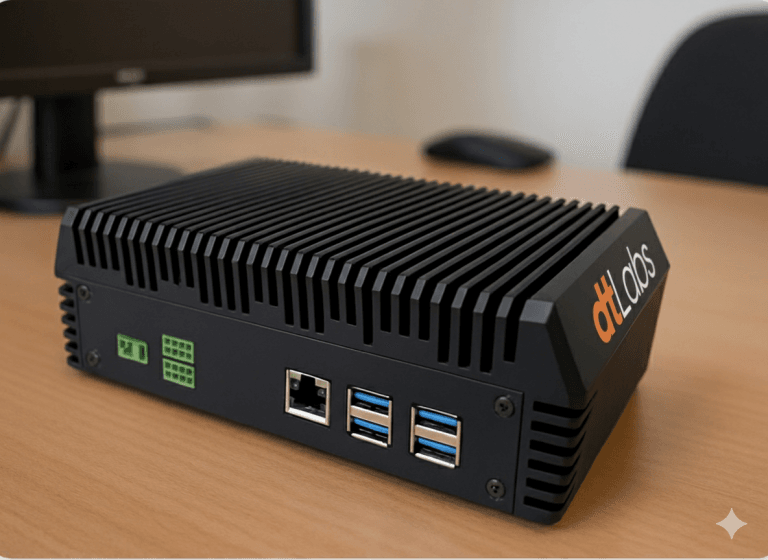
In this post, we introduce the AIBox, a key component of our AIOS platform. It’s a compact device that brings AI processing closer to where data is generated. The main advantage of this approach lies in its low latency and bandwidth efficiency, since images don’t need to be sent to the cloud for processing.
The article explains how this technology can be applied to monitor production lines, count objects, and analyze people flow in real time, among many other uses—making it a versatile solution for companies that need fast intelligence without relying on constant connectivity.

The content discusses the transition from manual measurement methods to automated systems based on 3D sensors and cameras. “Smart Volumetry” enables precise calculation of inventory volumes—such as grains or minerals—and load occupancy in trucks and trains.
The article emphasizes the elimination of human error, faster data collection, and improved logistics planning. With accurate real-time data, companies can prevent vehicle overloading and optimize physical space usage, directly enhancing business profitability.

This summary explains the steps behind facial recognition—from detecting a face in an image to creating a unique “facial map” for comparison within databases. The article demystifies the technology, addressing both its security applications (access control and fraud prevention) and its convenience benefits (automatic check-ins and service personalization).
It also covers ethical considerations and the importance of data protection, emphasizing the balance between technological potential and the need for privacy and regulatory compliance.
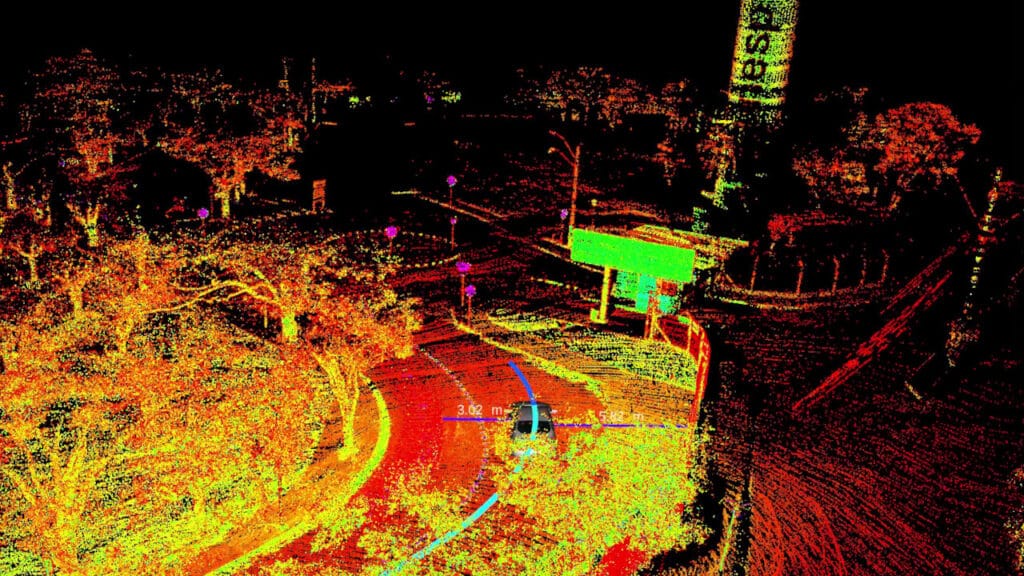
This guide introduces SLAM (Simultaneous Localization and Mapping) as the solution to the “chicken-and-egg problem” in robotics, enabling devices to build a map of an unknown environment while simultaneously tracking their own position within it.
The article details the core components of a SLAM system, including sensors such as LiDAR and cameras, as well as the mathematical frameworks required for real-time processing. It also provides a thorough comparison of popular SLAM algorithms—like Cartographer, LIO-SLAM, and ORB-SLAM3—helping readers understand which tools best suit specific environments.
Beyond robotics, the content explores a range of applications in augmented reality (AR), industrial inspection, and autonomous vehicles, offering a fundamental understanding of how SLAM democratizes access to advanced automation by removing the need for pre-existing infrastructure such as GPS.
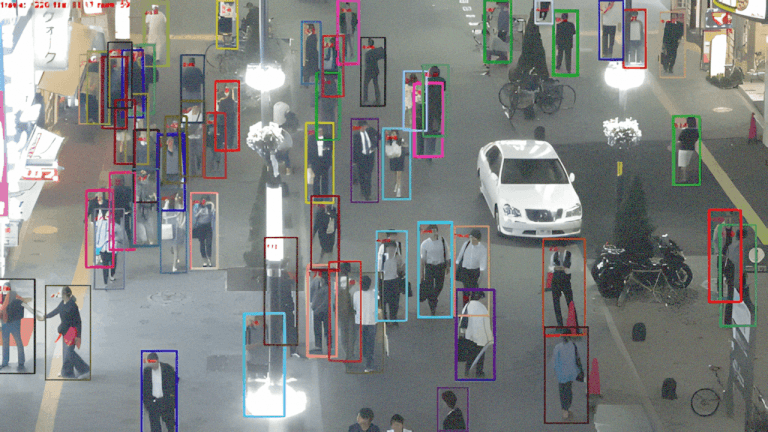
This article delves into the complexities of Multi-Camera, Multi-Object Tracking (MCMOT), explaining how it overcomes the limitations inherent in single-camera setups. The content outlines the fundamental stages of the process, including object detection, feature extraction, and the critical step of data association across different viewpoints.
It highlights two main methodologies: the geometric approach, which uses homography matrices for overlapping views, and the deep learning–based approach, which employs re-identification (Re-ID) models to track objects across non-overlapping areas.
By addressing challenges such as occlusion and varying lighting conditions, the article demonstrates how MCMOT is essential for applications like crowd monitoring, traffic management, and retail analytics. It serves as an informative guide for those looking to implement robust surveillance and operational efficiency tools through modern computer vision.
Conclusion
The diversity shown above captures the very essence of our blog. Published biweekly in both Portuguese and English, all our articles are carefully crafted in collaboration with industry experts, ensuring high-quality, relevant, and strategic content to support your digital transformation journey.
We look forward to having you with us in 2026 as we continue this journey through the fascinating world of artificial intelligence and computer vision.