

Summary
Loss prevention is a crucial activity in the success of any retail operation. According to data from the 2025 Abrappe Survey on Losses in Brazilian Retail, which analyzes sector data for 2024 in the country, the average shrink rate in retail was 1.51%.
At first glance, that number may seem small, but considering that restricted retail, which excludes automotive and building materials segments, generated US$ 485.83 billion during the period, it represents a loss of US$ 7.39 billion.
When people talk about “loss prevention,” the first thing that comes to mind is theft. And while theft accounts for an important share of that total (26.41%, combining internal and external theft, according to Abrappe data), it is not the main factor. Commercial and operational stockout, administrative errors, inventory errors, and product master-data errors together represent a much larger share: 53.74% of all losses.
In other words, Brazilian retail loses US$ 3.98 billion to operational losses caused by factors that, in theory, should be under its control. This loss is often driven by process errors, such as products being left in the wrong place, poor management of expiration dates and stock, incorrect display, or improper handling.
These are problems that monthly audits take too long to detect: by the time they appear in a report, the damage has already been done. Worse, implementing a fix and waiting for the next report to see whether it worked means operating for months, or more, in a suboptimal way.
What Is an Operational Stockout?
Let’s look at one of the most insidious causes of retail losses: operational stockout (also known as operational out-of-stock), which can be defined as the situation where a product is in stock, but not on display.
Imagine the following scenario: your daily report shows that sales of a popular product dropped unexpectedly today. That is odd, since it is not only a best seller but also on promotion. What happened?
You start mentally reviewing several possibilities. “Did a competitor undercut my price? Did the marketing campaign fail to run? Did the stock run out earlier than expected?”
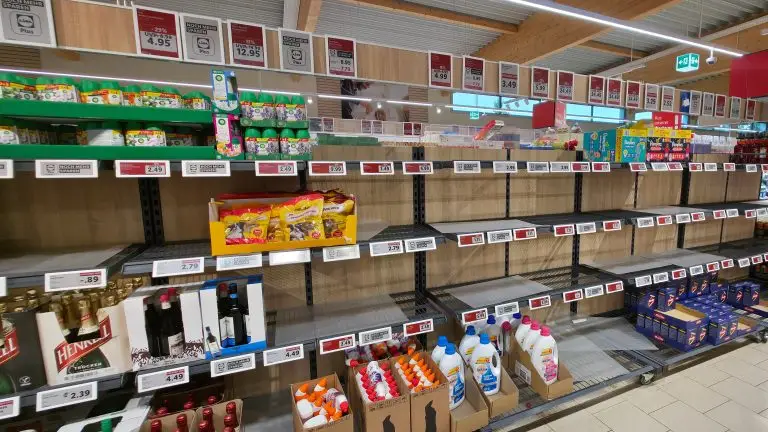
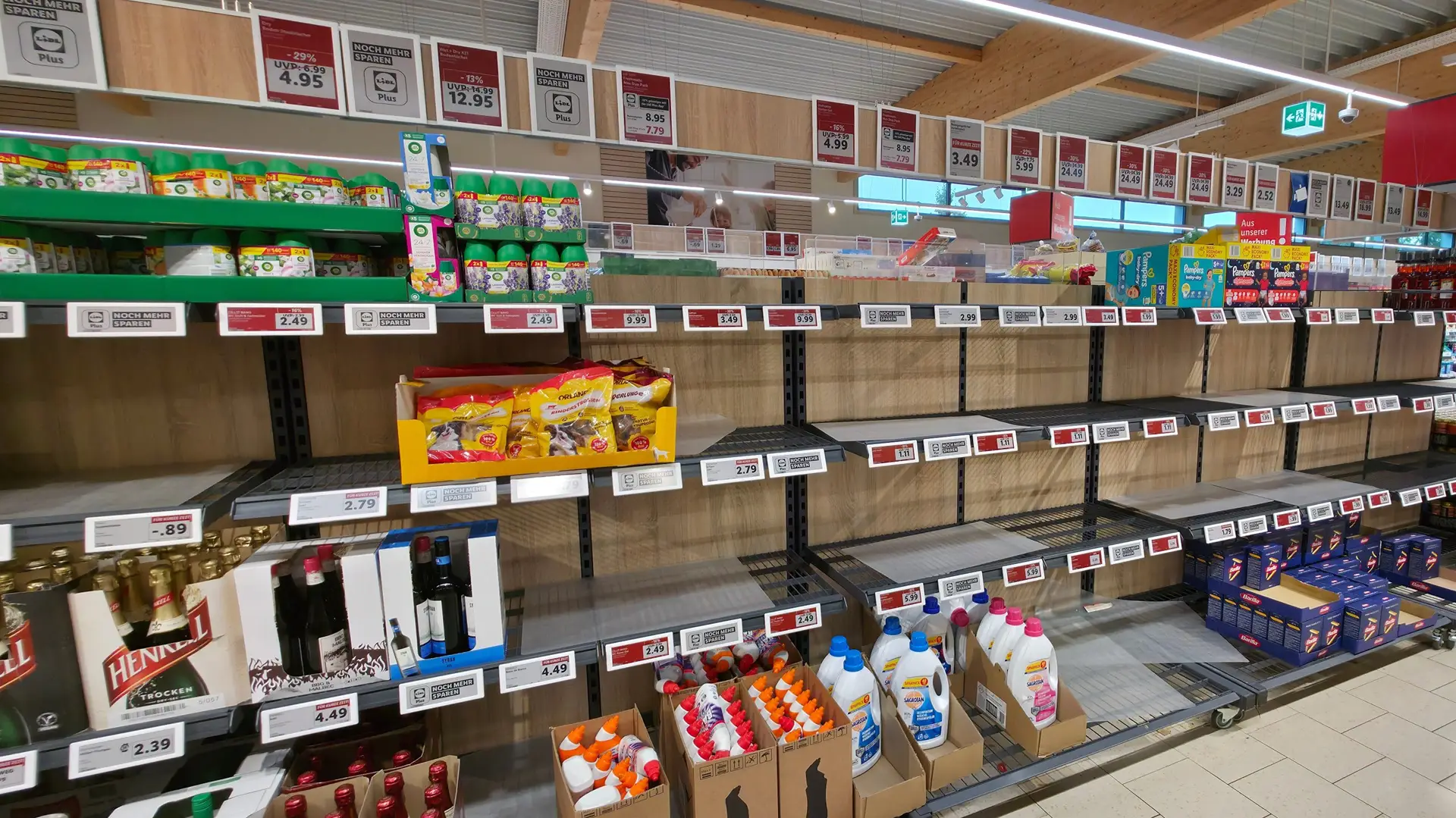
Then you remember the definition of operational stockout and take a quick look at the shelf. The cause becomes clear immediately: a large empty space where the product should be. Used to a rigid restocking routine, your staff did not keep up with demand and failed to restock it in time.
Another common cause of operational stockout is product placement errors, such as putting items in a low-traffic area or in a place where shoppers do not expect to find them, which effectively renders them invisible. There is a reason why pasta, tomato sauce, and grated cheese are often placed near one another in a supermarket: customers expect that layout because they all go into the same meal.
Putting tomato sauce on promotion in a display near laundry detergent is a good way to confuse shoppers and lose sales. Of course, this is an exaggerated example, but other situations may not be so obvious.
On its own, operational out-of-stock accounts for an average of 5.10% of losses in Brazilian retail. Based on total losses of US$ 7.39 billion, that means this single process failure is responsible for US$ 243.84 million in losses. But averages can be misleading, and the real loss may be even higher depending on the segment. In supermarkets, it exceeds 7%, and in convenience stores it reaches nearly 10%.
The Real Problem Is Missing Data
Unlike e-commerce platforms, where analytics and measurement tools are built into every stage of the buying journey and every interaction between the customer and the product is analyzed in real time, physical retail operations often rely on primitive data-collection methods and ineffective analytics tools, when they exist at all.
The impact is clear when we look at the examples above. Both situations could have been solved quickly with solutions capable of collecting and analyzing camera and sensor data in real time and automatically alerting teams to deviations from the expected pattern.
Another example: historically, your store sells an average of X cans of powdered milk every Tuesday. But this Tuesday, sales are below expectation. A data analytics solution would be able to detect that deviation, correlate it with customer movement in the corresponding aisle, and generate a real-time alert: “Powdered milk sales are below expected. Customers are engaging in aisle 7 but not buying. Check: price, stockout, defective product, product placement.”
Beyond the financial hit, operational out-of-stock also affects the customer experience. A shopper who repeatedly runs into empty shelves becomes dissatisfied and, over time, stops visiting your store. In retail, the cost of winning back a lost customer is always higher than the cost of keeping the right product in the right place.
And the excuse of “not investing in equipment” does not hold here. 100% of Abrappe survey participants already have camera systems (CCTV) in their stores. But only 35.2% use the footage for data analysis. In other words, the equipment is already there and operational, but it is underused.
Conclusion: The Danger of System Blindness
In short, the main cause of losses is not the lack of cameras, but poor analysis based on insufficient data. Managing an operation with outdated or incomplete information is not management; it is simply reacting to losses after they have already happened.
The question for you is: how current and complete is the data that reaches your desk today? Are you managing the reality of your store, or just an illusion fed by a system that does not talk to physical inventory? Without performance indicators that reveal the root cause of each discrepancy, loss will continue to be treated as an accepted cost instead of a solved problem.


Share this post