Sumário
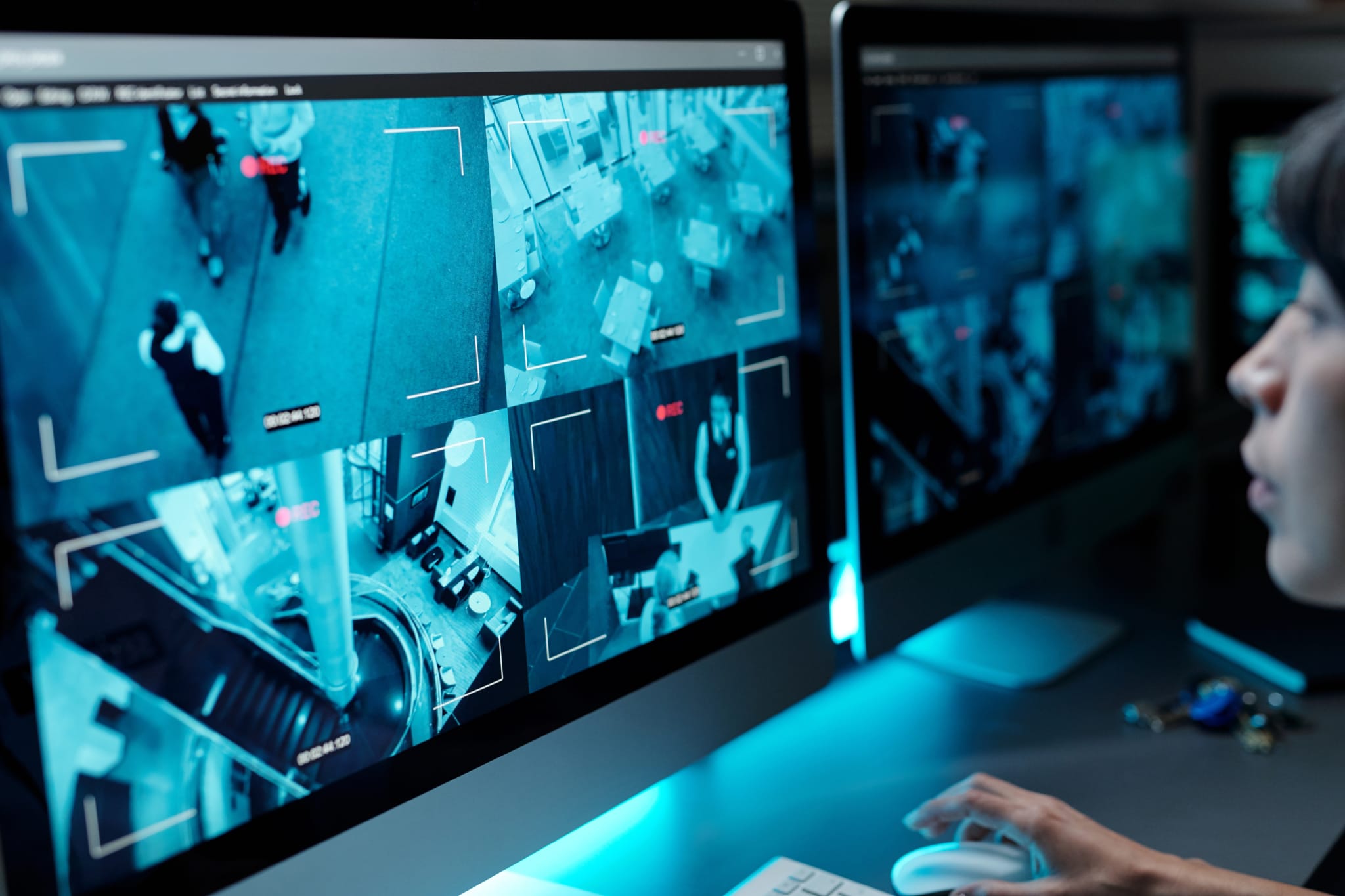
In Corporate Law and Compliance, there is a dangerous gap between “knowing what happened” and “being able to prove what happened.” For many organizations, the camera system is seen as a silent insurance policy, providing indisputable evidence of events. An incident happened? Just “pull the footage” to see where the truth lies.
However, when a serious incident occurs — such as a workplace accident or a security breach — it becomes clear that the current monitoring setup is, in fact, a dead archive: fragmented and hard to access. This can slow down your legal team’s response time and even contribute to losing a lawsuit.
The “Needle in a Haystack”
Imagine the following scenario: an employee suffers an accident in an industrial plant and sues the company. He claims the incident was caused by the lack of Personal Protective Equipment (PPE) and that the requirement to use it was never clearly communicated. The legal department knows this is not true and needs the footage to show that the employee had the equipment and that the incident resulted from his personal decision to ignore the rules.
The real problem starts when trying to retrieve this footage. Most companies still operate with simple digital video recorders (DVRs) spread across multiple sites. To find what they need, an analyst must know the exact minute and second of the event. If the incident occurred during a shift change or if the recorder’s clock is not properly set, the search becomes an exhausting “trial and error” process.
Worse: if it is necessary to understand the employee’s behavior in the days leading up to the incident to prove a pattern of negligence, the team will have to watch hundreds of hours of video manually. In limited systems, the search is blind: you only have date and time, but no context or intelligent way to locate what matters.
The Cost of Invisible Evidence
Relying on a basic recorder for legal defense is like trying to find a specific sentence in a library of a thousand books without an index or search system. And the more time passes, the lower the chance of finding that proof.
This is because DVRs have limited storage capacity. To ensure continuous recording, they keep videos only for a specific period, overwriting the rest. While the team spends days trying to locate the crucial segment, the system may simply overwrite the old footage to make room for new recordings, permanently destroying the evidence.

The lack of agility has a direct impact in court. According to data from the International Labour Organization (ILO), Brazil records a workplace accident every 51 seconds, with a total of 4,090,061 reported cases in the SINAN information system considering the historical series between 2007 and 2024. This makes the Labour Courts one of the most in-demand branches of the judiciary in the country, with a 28% increase in new cases according to the “Justiça em Números 2024” report by the CNJ.
In this highly litigious environment, speed in the evidentiary phase — when evidence is presented — is a critical factor for the swift resolution of disputes and for the success of settlements and rulings.
Without the ability to quickly filter who was present at the scene and how the area was signposted, the company risks failing to obtain the necessary evidence and becomes vulnerable to judgments based on assumptions rather than proven facts. With a weakened defense, the risk of subsequent labor lawsuits increases, as the company starts to be seen as an “easy target.”
The cost of evidence that “cannot be found” is measured in avoidable settlements, reputational damage, and a labor liability that could have been mitigated with efficient visual data management.
In addition, the lack of advanced search tools places the company in a reactive position. It only “sees” the accident after it happens and is unable to answer crucial questions: besides the worker who was injured, how many others ignored the safety warnings? How often does this happen? In which locations?
Without these answers, the company loses the opportunity to use video for preventive safety audits, avoiding future accidents — and lawsuits.
Conclusion: Information Is Power, But Only If It Can Be Found
Having cameras and a DVR does not guarantee legal security. If your video system does not allow you to quickly locate, authenticate, and protect a piece of evidence, it is merely an operational cost, not a protection tool.
How long does your company take to find a critical image in the event of an incident? If the answer is “more than a few minutes,” your risk strategy may be vulnerable. Want to understand how video centralization and intelligence can protect your operation?